

Singing Memory
Palo, Carnegie Hall, and what the body carries across centuries
Some music doesn’t travel alone.
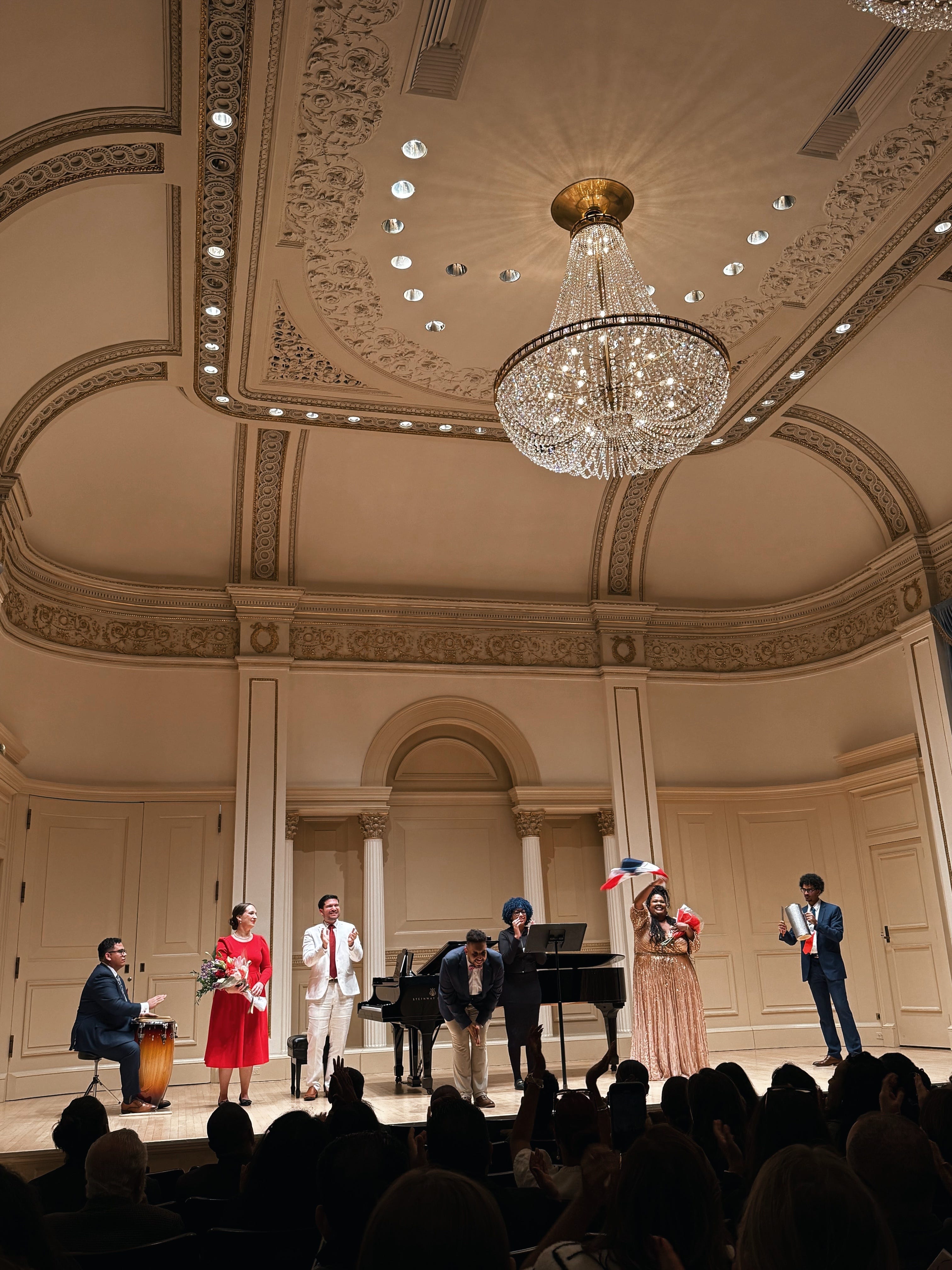
When I sang Palo at Weill Recital Hall at Carnegie Hall, I wasn’t just performing a song. I was carrying something — a lineage, a spiritual practice, a form of memory that exists in a completely different register than what concert halls were built to hold. And yet, there I was. There it was. Moving through my body, filling that room, reaching people who had never heard it before, people who grew up with it, and people who recognized it somewhere beneath language.
The video has been circulating. People are responding in ways I’m still sitting with. And I’ve been asking myself what it means not just for my career, but for the music itself. For what gets to be visible, where, and why.
Palo, also known as atabales, is a Dominican sacred music tradition. Its roots reach into the Congo Basin of central-west Africa, carried to the Dominican Republic through the violence of the transatlantic slave trade and braided over centuries with European folk Catholic influences until it became something entirely its own. Something Dominican. Something that belongs to my people specifically.
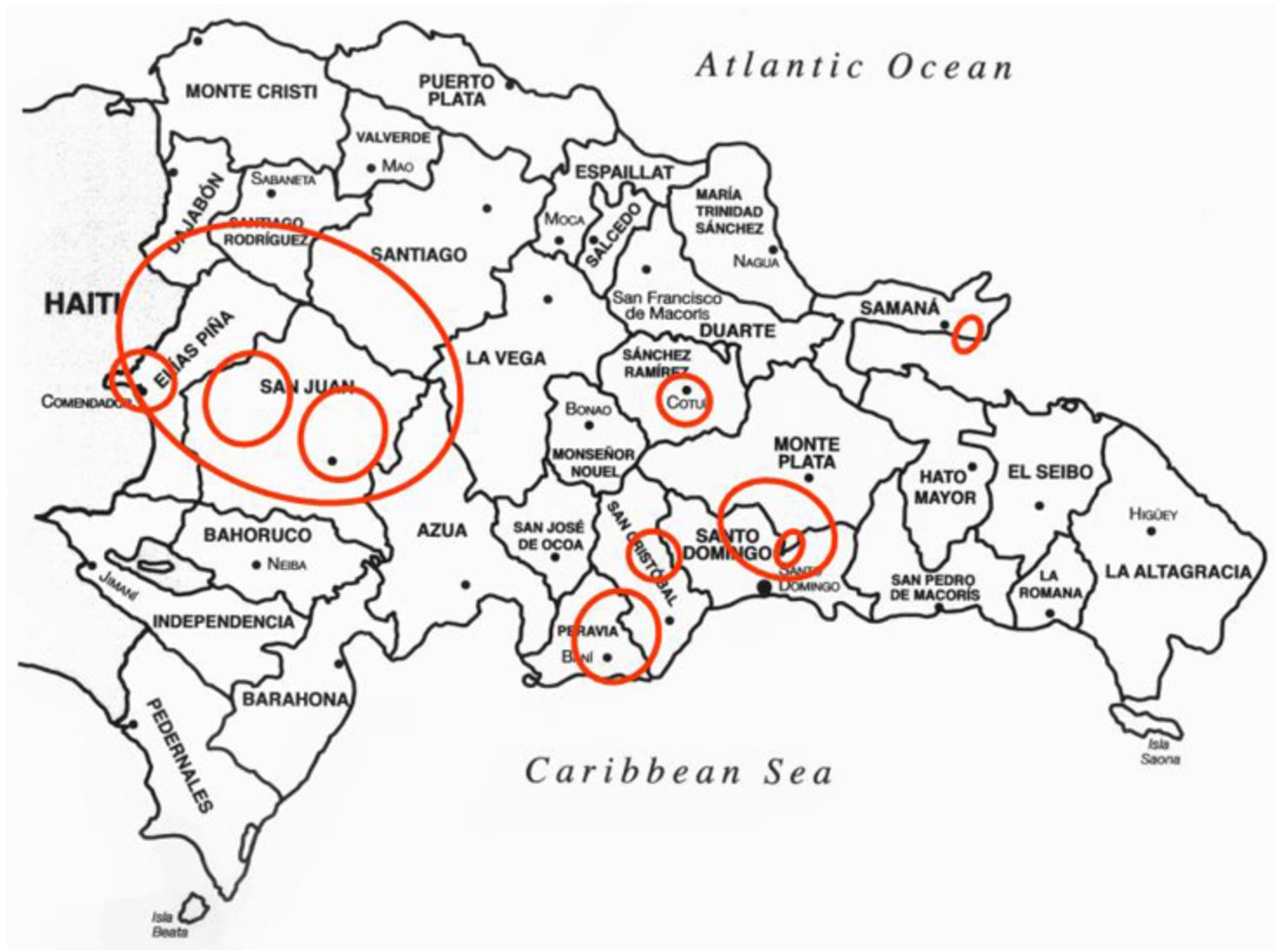
The music is built around the drum and the human voice. Long hollow drums called palos, the word for sticks, because these instruments are made from hollowed logs, their heads stretched with cowhide, are played with the hands, held between the legs, tied to the palero’s waist by a rope. There is a master drum, the palo mayor, wide and commanding, played alongside slimmer drums called alcahuetes. Güiras, metal scrapers, weave through the rhythm. Maracas. The catá, a small stick used to strike the master drum. The specific configuration of instruments and the specific rhythms vary by region. There’s the palo corrido in the East, the palo abajo in San Cristóbal. The geography of the island lives inside the music.
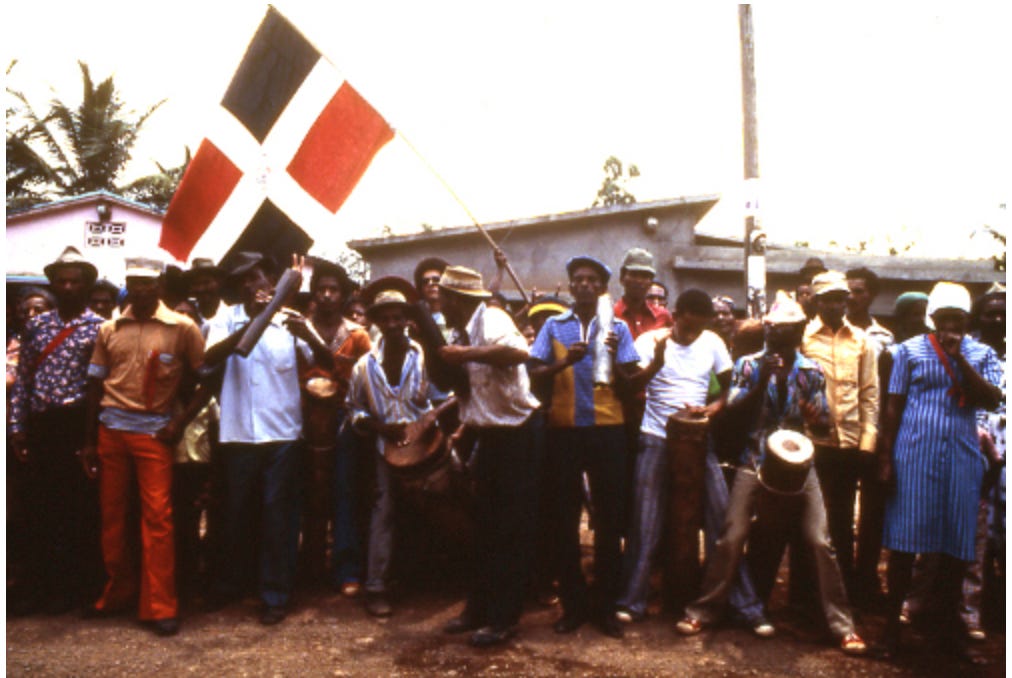
Palo is communal by nature. It is organized around Dominican brotherhoods called cofradías, originally male, over time sustained by women and family inheritance, each devoted to a particular saint. The cofradías are responsible for honoring their saint with festivals called velaciones. At these ceremonies, one of the paleros sings verses while the others play, and the surrounding community participates, invoking the spirits of ancestors and saints, sometimes entering states of possession. The boundary between the living and the dead is permeable in this music. That’s not metaphor. That’s the tradition.
Palo is also related to Dominican folk Catholicism, with its own pantheon of deities and saints called misterios: a syncretic spiritual world that connects to other Afro-Caribbean traditions across Cuba, Haiti, and Brazil, while remaining distinctly Dominican.
When I say I sang Palo at Carnegie Hall, I mean I sang something that has been held by communities, by brotherhoods, by families, by ancestors for centuries. I mean I carried something sacred into a space that has no framework for what it was holding.
I grew up in a household where music and spirit were not separate categories. Where the rhythms of the Dominican diaspora moved through the kitchen, the church, the living room without needing to justify themselves or perform their legitimacy for anyone. Culture wasn’t something I studied. It was something I was held inside of.
My parents worked relentlessly so I could explore; from dancing ballet, jazz, and tap from ages four through thirteen, to learning guitar, to following my curiosity all the way to singing opera. Their labor made my freedom possible. And part of what I’ve understood slowly, over the years of that freedom, is that the exploration was always supposed to lead me back. Not away from the traditions that formed me but through them. Deeper into them. Into fuller possession of what I was given.
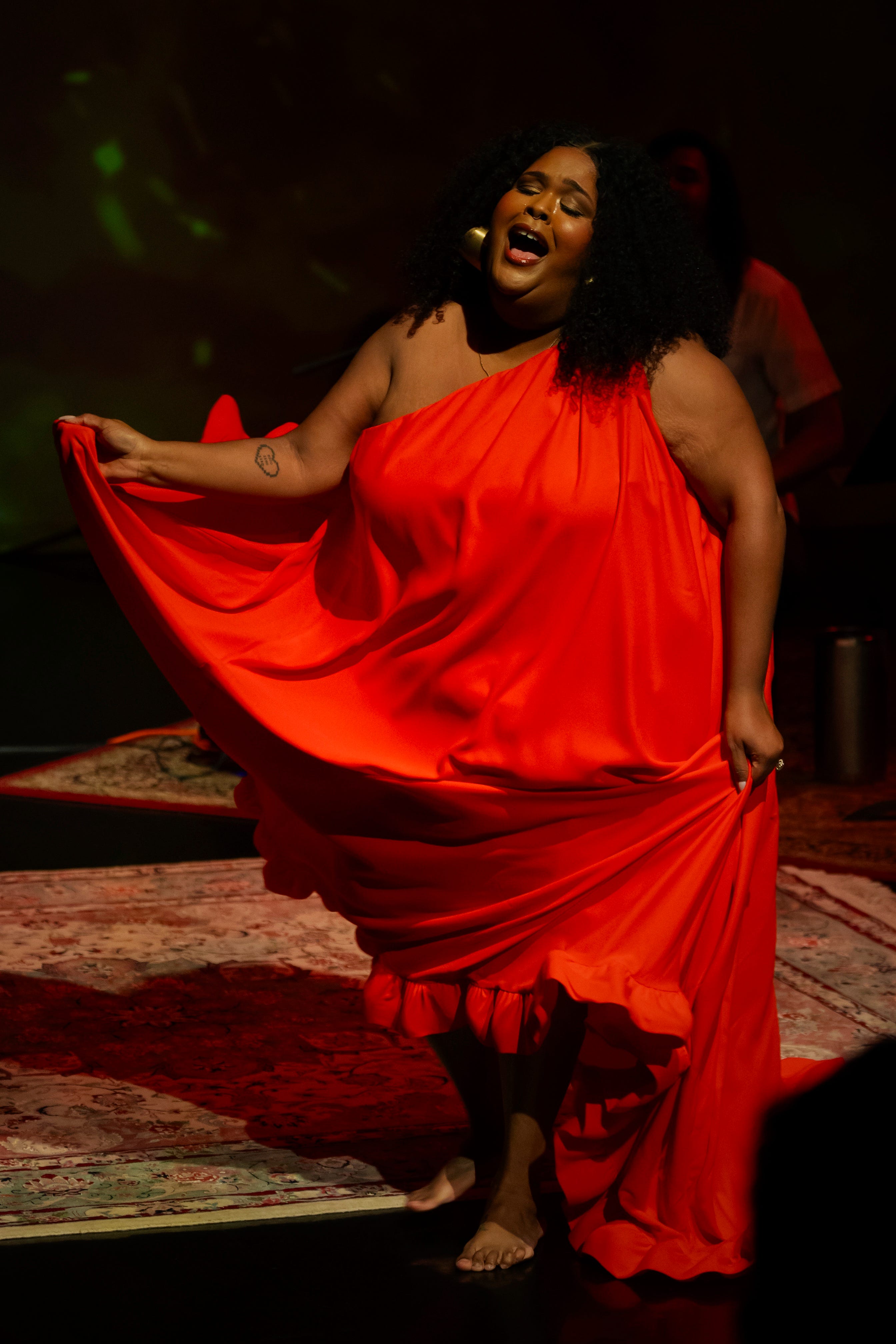
Opera found me, or I found it. The story of how an Afro-Dominican first-generation girl ends up singing Verdi and Palo in the same body is its own essay, maybe its own book. But the short version is this: I never experienced those two things as opposites. I experienced them as different rooms in the same house. Rooms with different histories, different rules, different relationships to power, but connected, always, through my body. Through what I carry.
Classical institutions have a complicated relationship with Afro-diasporic music. They will celebrate it as influence or inspiration while maintaining firm ideas about what belongs on their stages and in their programs. They will invite Black and brown artists to perform, sometimes, while continuing to center repertoire built on a series of deliberate exclusions. They will talk about diversity and representation while programming the same canon, season after season, with small variations at the edges.
Bringing Palo into Weill Recital Hall was not a diversity moment. It was not a gesture toward inclusion. It was an argument, made with my body, my voice, and the music itself, about what belongs in these spaces and who gets to decide.
Palo doesn’t need Carnegie Hall to validate it.
It has been held by cofradías across the Dominican Republic for centuries. It survived colonization. It survived enslavement. It survived every attempt to dismiss, domesticate, or disappear it. It is alive right now in communities across the island and throughout the diaspora, not as heritage, not as artifact, but as living practice.
What Carnegie Hall offers is not legitimacy. What it offers is a room where new people might hear something they’ve never encountered, and be changed by it in ways none of us can predict.
That’s worth doing. That’s worth the complexity.
Cultural memory is not metaphor.
It is a living transmission. A form of knowledge that moves through the body rather than the page. When the palo mayor is struck, and a palero begins to sing, something is being activated that connects the present to centuries of practice to specific communities, specific saints, specific ancestors who kept this music alive when keeping it alive was an act of resistance.
Every time this music is sung in a new context, something is being decided about who gets to carry history and how. Every time an Afro-Dominican artist stands on a stage with this music, they are making an argument with their body about lineage, about presence, about what deserves to be heard.
What the video captures, I think, is that argument landing in real time. People responding not just to the music but to the recognition of something — the feeling of watching someone carry something real into a space that usually asks you to leave your origins at the door.
That recognition is what I’m interested in.
Not visibility for its own sake. Not virality. But the specific, necessary act of making cultural memory audible in spaces that have historically required silence.
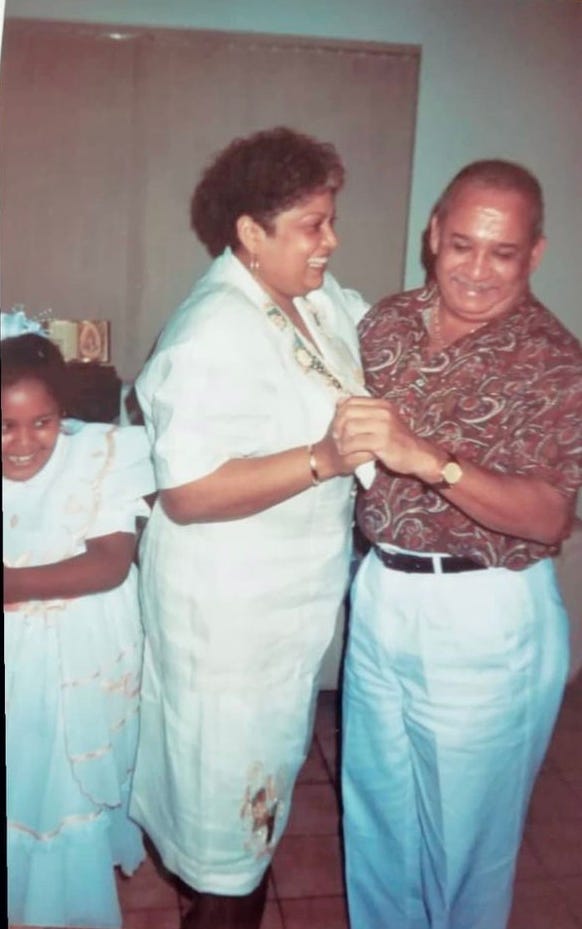
I’ve been thinking about my parents a lot since the video started circulating.
They didn’t take many vacations. They worked. They made sure I could dance and sing and study and follow paths they didn’t have access to. They gave me rooms they never entered themselves.
Part of what I was doing at Weill Recital Hall was bringing them with me. Bringing the music that carries our lineage, our community, our ancestors into a room that was built for a completely different kind of inheritance.
That felt right. It felt like exactly the kind of Becoming I’ve been writing about here.
Not assimilation. Not performance for an audience that needs to be convinced. Not diversity programming.
Just: this music exists. This lineage exists. This body, with all it carries, is here.
I’ll keep singing Palo. I’ll keep bringing it into spaces where it hasn’t been before, carefully, in full relationship with the communities and traditions it comes from, with reverence for what it holds.
And I’ll keep writing about what that means. About cultural memory and diaspora and the long, complicated, necessary work of making art that doesn’t ask you to leave yourself at the door.
If you’re here because of the video, welcome. There’s more where that came from. Slower, in essay form, with room to sit with the questions rather than just feel them pass.
If you’ve been here, thank you for staying.
There’s more to carry. And I’m glad to not be carrying it alone.
Thank you so much for sharing this. I went to a show at Carnegie at the end of January to watch the soprano opera singer Axelle Fanyo and she got the chance to use improvisational methods of singing and rhythm, and it was so inspiring to me.
Knowing that Carnegie is emphasizing this commitment to let people showcase their cultures and the wide range of musical talent outside of the classical canon is so exciting for the future of artistic and cultural experiences in the city!
You are helping to widen people's horizons just by being you and expressing your own culture, and as a Puerto Rican, I can't help but love that.
This article is so well researched and thorough, you can feel the love, care, and passion coming through with both your historical and analytical writing and through your performance art. I hope I can see you sing some day!