

Tender Architectures
On what I didn't write about in Becoming — and where this series is going

There’s a version of care I know how to write about.
The structural kind. The kind you design, defend, and build into the systems around you. Care as boundary. Care as policy. Care as the decision to choose continuity over momentum, to stop performing ease at your own expense, to build work that doesn’t require your self-erasure to survive.
That version of care I can articulate clearly.
I spent six essays doing it.
What I didn’t write about, what I kept circling without entering, was the interior of all of it. Not the architecture of care but the felt experience of it. Not the philosophy of being held, but what actually happens in the body when you finally let it occur. Not the decision to stay, but the specific vulnerability of being somewhere you were actually built for and not immediately looking for the exit.
That’s where this series lives.
Tender Architectures is about intimacy, power, and what I’m learning about care as something you receive, not just something you build. It’s about touch as a form of knowledge that lives below language. About the erotics of full attention — what becomes possible when someone is genuinely, completely present with you, and why we are simultaneously starving for it and terrified of it. About why power and tenderness are not opposites, even though most of the professional and artistic spaces I’ve moved through have insisted they are. About repair. About belonging. About pleasure as infrastructure rather than reward.
And about the hardest practice I know: learning to let care in without immediately converting it into output.
This series is more interior than Becoming. More willing to be unresolved. More directly in conversation with the Black feminist thinkers, the Afro-Dominican spiritual traditions, and the embodied knowledge that has shaped how I understand my own life, not as separate influences I move between, but as one inseparable truth that lives in my body.
I want to say something honest about why this series is harder to write.
Becoming asked me to think clearly about my values and name my commitments. That’s work I know how to do. I’ve been trained as an opera singer, as a cultural strategist, and as a social worker to hold complexity and make it legible. To take the interior and give it shape for an exterior audience.
This series asks something different.
It asks me to write from inside experiences that resist translation. From the body. From the relational field. From the places where what I know and what I feel and what I carry as a Cimarrona are not three separate things I move between strategically, but one truth that doesn’t wait for me to be ready before it makes itself known.
I’m an Afro-Dominican woman writing about intimacy, power, and pleasure in public. That is not a neutral act. I’m doing it anyway because staying in the safer register of structure and strategy would be its own kind of self-erasure. And I just spent six essays writing about why I’m done with that.
So what is a tender architecture?
It’s any space — physical, relational, spiritual — that was built with the full humanity of its inhabitants in mind. Not optimized for productivity. Not contingent on you performing wellness or ease or gratitude in order to be welcomed inside.
A body that has learned to receive is a tender architecture. A relationship that can hold honesty without punishment is a tender architecture. A rehearsal process that makes room for uncertainty is a tender architecture. A community where you don’t have to translate yourself before you can be present is a tender architecture. A spiritual practice that knows the boundary between the living and the dead is permeable and treats that permeability with reverence rather than fear is a tender architecture.
Most of the spaces I’ve moved through in my life were not built this way. But I’ve also been inside spaces that were different. Moments when the room was actually designed for me. When I didn’t have to shrink or translate or brace.
Those moments showed me what was possible. What the other thing feels like in the body.
This series is an attempt to understand what creates those spaces — in institutions, in relationships, in creative practice, in spiritual life, in the body itself.
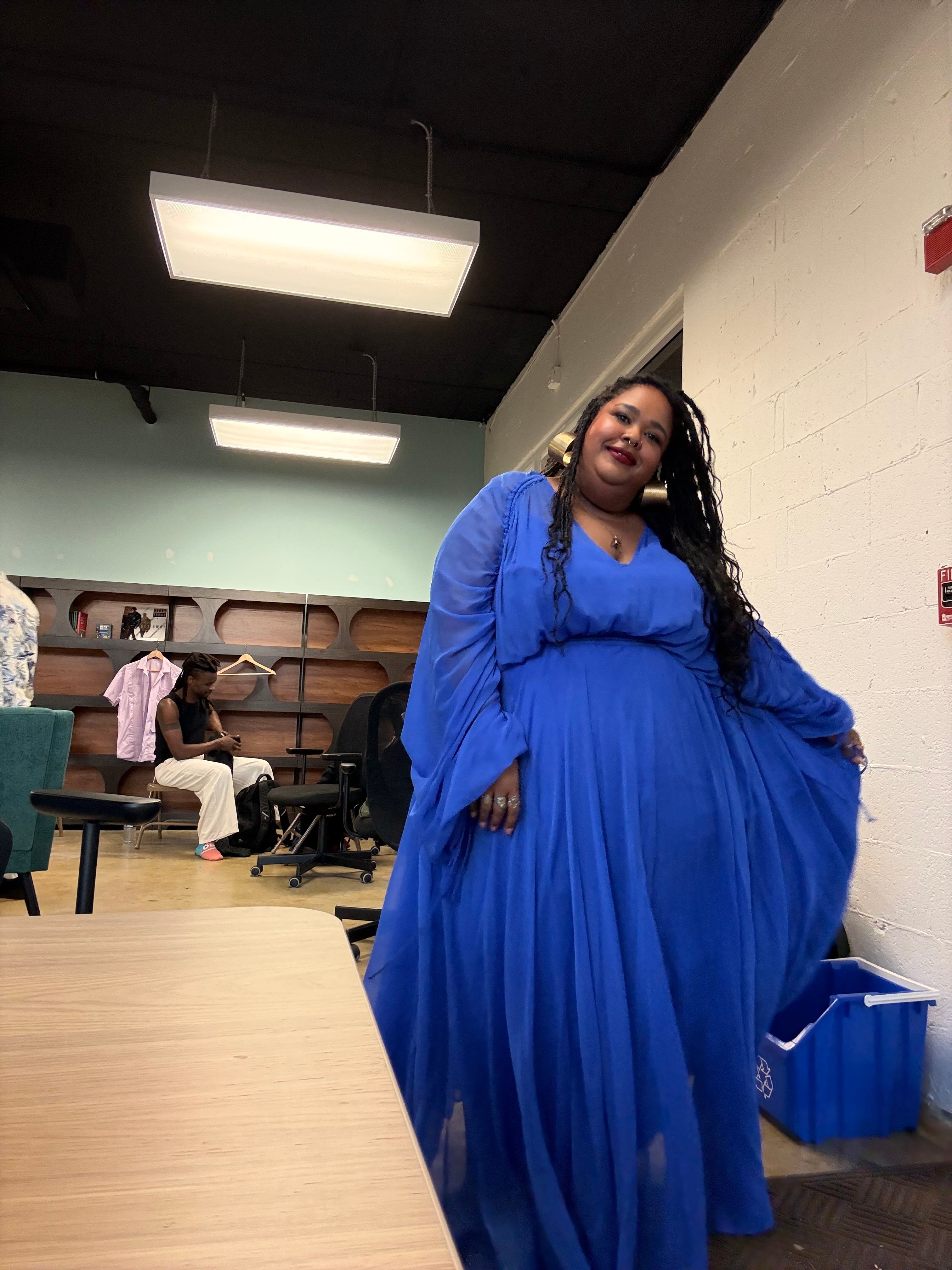
If you’ve been here for Becoming, With Care, thank you. That series asked hard questions about holding, continuity, and what I’m choosing to build. This one goes underneath those questions, into the felt experience of actually living them.
If you’re new, welcome. You don’t need to have read anything before this. The only requirement is that you arrive slowly.
The first essay will be published in two weeks.
It’s about touch as a form of knowledge, what we know through the body that we cannot know any other way, and why our culture works so hard to make us distrust it.
I’ll see you there.
— Zuly